 contact@mediskill.com
Can ozone therapy help with Candida Protocol?

At A Glance:
- Candidiasis is a clear diagnosis in conventional medicine where only an antifungal is prescribed, but a vague description of a collection of symptoms in alternative medicine.
- Integrative medicine practitioners tend to recommend Candida Protocols that include dietary changes, antifungal herbs, detox support, and more to aid in eliminating the Candida overgrowth. However, both approaches tend to fail and eventually result in a recurrence of the yeast overgrowth or the bothersome symptoms because the terrain or dysfunction that allowed the fungal overgrowth are not addressed.
- Ozone therapy may improve the success rate of Candida protocols by improving the terrain. While ozone has antimicrobial properties, the amount of ozone used to treat Candidiasis may not be high enough to kill all the microbes in a person. Instead, ozone therapy stimulates the immune system, improves circulation, supports mucosal barrier repair, improves the gut flora, and breaks biofilms.
- In countries where ozone therapy is common, it's a core part of any Candida or fungal infection treatments. However, there are only a limited number of published clinical trials. Collectively, the available trials for recurrent vaginal candidiasis show clear benefits whether alone or in combination with antifungals.
- Given that Candida protocols may take months and require frequent treatments via multiple routes, having a home ozone therapy setup can be cost-saving compared to paying for treatments at a clinic.
Candida is a naturally occurring yeast that is common on our skin and mucosal surfaces like our mouth, digestive tract, and reproductive organs [1]. It can become a problem when it’s out of balance with local microbes, tissue barriers, and immune function [1].
A Candida infection, or candidiasis, is how medicine describes the transition from colonization to infection [1]. It happens when normal checks on it are weakened [1]. When this happens, getting rid of it and restoring balance can be tricky.
From a conventional medicine perspective, Candida is typically treated as a straightforward infection. When someone tests positive, an antifungal medication is usually prescribed for a specific period of time [1]. In integrative medicine, Candida protocols often include antifungal herbs, dietary changes, and various probiotics [2]. Both approaches have their pros and cons, and both can fail, especially when the terrain is not fully addressed. This article explores how ozone therapy may play an adjunctive role to regain control of the overgrowth and restore balance.
What Is Candida?
Candida is not some foreign invader. It is a type of yeast that is already living on your skin, in your gut, and on mucosal surfaces as a normal component of your microbiome. Most of the time, Candida co-exist peacefully with other microbes.
Candida comes in multiple species:
In the case of Candida overgrowth or infection, an imbalance arises between it and other microbes commonly found within the microbiome [5]. Often, this happens when normal checks on Candida are weakened, causing it to shift from a neutral resident to symptomatic infection [5].
Candida can present with a wide array of symptoms, depending on where the imbalance is occurring. It can be helpful to think of Candida overgrowth as more of a terrain problem than a localized one. That means that something has been disrupted in the body’s internal balance to allow for the overgrowth to occur.
From an integrative medicine standpoint, Candida is often thought of as a symptom of a deeper issue and not a standalone disease.
Some of the most common terrain-level factors include [5]:
So the real question is not whether you have Candida. You almost certainly do. The question is what are the dysfunctions in your internal terrain to allow it to overgrow?
Why do Candida Protocols Fail?
Functional and naturopathic medicine takes a root-cause approach to Candida, focusing on optimizing nutrition, herbal remedies, and lifestyle changes [15]. This tends to include a low-sugar or low-carb diet, antimicrobials like oregano or garlic, caprylic acid to break down biofilms, and probiotics to replenish and rebalance the microbiome.
While using antifungals and starving the yeast can be helpful, this approach often neglects the question of what is allowing the yeast to persist. This neglect then leads to persistent or eventual recurrence of symptoms. When Candida is truly recurrent, there is usually a reason that the local terrain allows it to persist (see above). This means that a protocol can work temporarily while you are on it, but symptoms return because the underlying driver stays unchanged.
Many Candida protocols are initiated based on a presumed diagnosis and are based on symptoms alone. The most common symptoms may include brain fog, bloating, fatigue, sugar cravings, recurrent vaginal symptoms. However, these symptoms can also overlap with many other conditions. In short, they are not specific to Candida.
Another hurdle to sticking with a Candida protocol can be the die-off symptoms. These tend to include bloating, headaches, fatigue, constipation and skin breakouts. While they only often last for a couple of days, they can be enough for people to stop the protocol before it is complete.
The Anti-Candida diet removes high-sugar, inflammatory foods to promote changes in the gut flora, balance blood sugar, support immune function, and manage inflammation. Because these diets remove unhealthy and processed foods, and get people to pay more attention to their diet, people following them tend to feel better and think that the protocol must be working. But when they go back to their typical diet, symptoms can return, whether due to re-introduction of inflammatory foods or because the terrain was not addressed.
“Candida” in Integrative Practice: Looking Beyond the Label
In integrative practice, “Candida” is often used as a broad label for a recurring pattern of symptoms:
- Digestive disruption
- Fatigue and brain fog
- Sugar cravings
- Recurrent fungal infections
- Skin issues
- Immune reactivity
But, this label can be overly simplistic. What is clinically described as Candida may not always be as straightforward as Candida albicans. It may reflect a different fungal species, a disrupted microbiome, impaired immune resilience, blood sugar dysregulation, or a broader shift in the body’s biological terrain.
What is clinically labeled as Candida may actually be:
- A different fungal species entirely (such as C. parapsilosis rather than C. albicans) [16]
- A sign of a compromised biological terrain, where immune suppression, mold exposure, dysbiosis, or other systemic imbalances have created conditions favorable to fungal overgrowth [14, 16]
- A marker of gut ecosystem collapse, where the loss of microbial diversity has removed the natural checks on fungal populations
- A reflection of metabolic dysfunction, where blood sugar dysregulation is literally feeding the yeast
This distinction matters because treatment depends on what is actually driving the pattern. In conventional medicine, candidiasis is usually approached as a defined fungal infection where symptoms are assessed, testing may be performed, and antifungal therapy is used if indicated [17]. This approach is important when the presentation is clear, such as with oral thrush, recurrent vulvovaginal candidiasis, skin infections, nail fungus, or more serious invasive infections.
In alternative and functional medicine, however, Candida is often discussed more broadly and sometimes more controversially. Many practitioners suspect Candida when someone has a specific cluster of symptoms. Typically, these include:
- Digestive symptoms: bloating, gas, constipation, diarrhea, or alternating between the two
- Brain fog and cognitive issues: difficulty concentrating, poor memory, feeling “spaced out”
- Fatigue: persistent tiredness that doesn’t improve with sleep
- Skin and nail problems: recurring fungal infections, eczema, psoriasis flares, or unexplained rashes
- Oral thrush: white coating on the tongue or inside the cheeks
- Recurrent vaginal yeast infections or urinary tract symptoms
- Sugar and carbohydrate cravings that feel almost uncontrollable
- Mood disturbances: anxiety, irritability, depression, or mood swings
- Joint pain or muscle aches without a clear cause
- Sinus congestion or recurring sinus infections
- Chemical and food sensitivities that seem to multiply over time
- Histamine intolerance symptoms: flushing, headaches, or hives after certain foods
- Any fungal infections such as toenail or skin infections
Beyond assessing symptoms, some practitioners also use urinary fungal metabolites, organic acid testing, stool testing, or blood or salivary antibodies as part of the assessment. While these tools may provide clues, they don’t always prove that Candida is the root cause of symptoms. Candida can be present without being the primary driver, and many of these symptoms can overlap with other conditions, including dysbiosis, SIBO, IBS, constipation, histamine intolerance, food reactions, metabolic dysfunction, immune suppression, hormonal shifts, and chronic inflammation.
This is why Candida can seem so stubborn to treat. If the underlying terrain is not addressed, any protocol, whether it involves antifungals, restrictive diets, or supplements, will only give temporary relief. The yeast burden may decrease over time, but the same internal conditions that allowed the overgrowth in the first place can remain unchanged.
From an integrative perspective, the goal is not just to target the organism but to understand why the body allows fungal overgrowth. This is where ozone therapy can be relevant. While often used for its direct antimicrobial effects, it may also support tissue oxygenation and circulation, reduce microbial burden, modulate the immune system, and influence the broader biological terrain. In this model, ozone isn’t a stand-alone treatment but one possible adjunct within a more comprehensive plan.
How Does Ozone Help with a Candida Protocol?
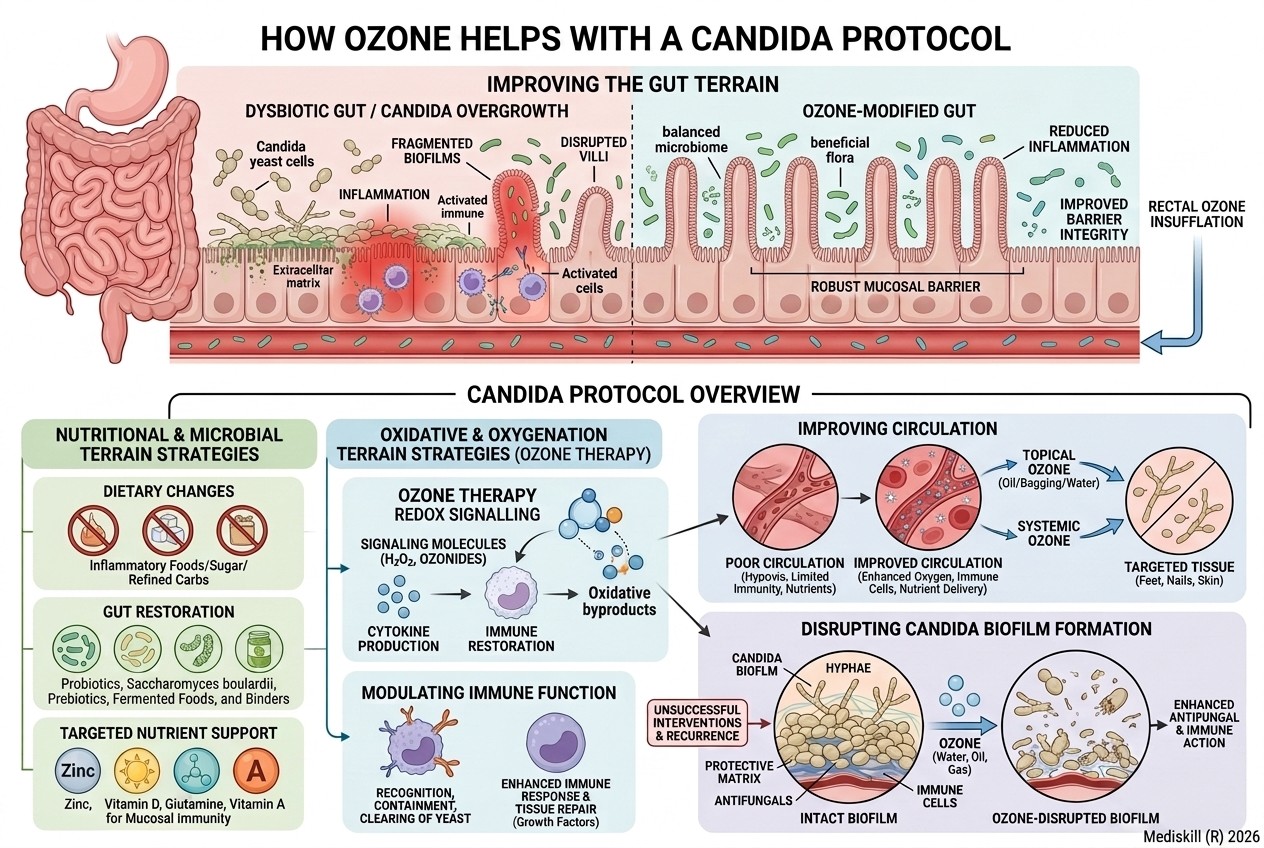
Candida protocols often fail because they are only looking at trying to kill the Candida overgrowth. A more integrative protocol should ask what it is about the body that allows the yeast to persist, and how to restore the local environment so recurrence is less likely. Ozone can be a helpful tool for that second question.
While ozone can cure Candida on contact, the amount of ozone used in ozone therapy may not be sufficient to treat all the Candida on your body. However, it works mainly by breaking the biofilms, improving your biological terrain, and supporting detoxification as you go through a Candida protocol.
These terrain-modifying effects are why ozone therapy can significantly boost the effectiveness of other interventions in a Candida protocol, including:
- Dietary changes, such as cutting out inflammatory foods, sugar and refined carbohydrates that feed yeast
- Gut restoration protocols, such as probiotics, Saccharomyces cerevisiae, prebiotics, and fermented foods, if tolerated
- Targeted nutrient support, such as zinc, vitamin D, glutamine, and vitamin A for mucosal immunity
Ozone addresses the terrain from the oxidative and oxygenation side, while these other strategies address it from the nutritional and microbial side.
Improving the Gut Terrain
Candida is part of the normal gut ecosystem, but when the microbiome gets disrupted it can contribute to dysbiosis and digestive symptoms like bloating, gas, stool changes, stomach pain, food sensitivities or more reactivity after eating [18]. While these symptoms are not specific to Candida, they are often part of the broader clinical picture when overgrowth is suspected.
That is why many Candida protocols often have a gut-focused component. The goal is not only to reduce yeast burden, but to restore the conditions that help keep Candida in check, like microbial balance, bowel regularity, barrier integrity, and immune resilience.
Ozone therapy may be relevant here because it appears to influence the broader gastrointestinal terrain [19]. In other words, it may help modify the tissue and microbial conditions that either support or suppress Candida colonization [19]. For example, rectal ozone insufflation supports the mucosal barrier in the large intestine and the gut flora by modulating inflammation and oxidative stress [20]. Ozone and ozone oil may also have some local antimicrobial effects, including activity against yeast, depending on the route and form used.
By improving the gut flora, supporting gut barrier function, microbial balance and immune signaling, ozone may help make the gut environment less hospitable to persistent Candida patterns.
Modulating the Immune Function
Candida and most other fungal infections are opportunistic [21]. This means they are more likely to grow when immune defenses are weakened or poorly coordinated. In this sense, recurrent Candida is not only a yeast problem; it may also reflect an immune terrain that is not effectively recognizing, containing, or clearing the organism.
Candida can also contribute to inflammation and release microbial compounds that irritate tissues and challenge immune function [5]. When the immune response is underactive, dysregulated, stagnant, or chronically inflamed, the body can struggle to restore balance [22].
Ozone therapy may help support immune function through redox signaling, which is partly how some immune cells communicate. During ozone treatment, reactive oxygen species and lipid oxidation products like hydrogen peroxide and ozonides can act as signaling molecules that can stimulate white blood cells and influence cytokine production [14]. Biochemical signals from ozone may also stimulate the release of growth factors involved in tissue repair, which could be relevant in chronic or slow-healing mucosal and skin lesions [23, 23].
Improving Circulation
Fungal infections may be harder to resolve in areas with poor circulation, especially the feet, nails, and distal skin [24]. When blood flow is limited, local tissues can receive less oxygen, fewer immune cells, and reduced delivery of important nutrients needed for repair [5]. This can create a weaker local terrain where fungal organisms are more likely to persist [25].
Systemic ozone therapy can improve circulation and oxygen delivery, which could make it a useful adjunct alongside conventional or integrative antifungal therapies [26]. At the same time, topical ozone oil, ozone bagging, or ozone water can also target the affected tissue and kill the fungi in the immediate area along with biofilm disruption [27, 28].
Disrupting Candida Biofilm Formation
One reason Candida infections can be so stubborn is that Candida can create biofilms. Biofilms are structured communities of microorganisms that attach to surfaces and surround themselves with a protective matrix. In other words, biofilms enable chronic infections to persist, evade treatment, and contribute to tissue irritation or recurrent symptoms [29].
These structured communities of yeast cells are a big reason why Candida infections tend to recur. Because they reside in a protective matrix, it shields them from both your immune system and treatments [30]. Here are some of the big ways they can cause issues [29, 31, 32]:
- Adherence: Biofilms allow Candida to anchor onto areas in the body, and even medical devices, where they can cause persistent infections.
- Resistance: Cells within biofilms are much less susceptible to typical treatments like antifungals because of the high density, altered growth state, extracellular matrix, and phenotypic shifts.
- Immune Evasion: When Candida exists in biofilms, it can better avoid or even blunt the immune system’s ability to recognize it and clear it.
- Persistence: Even once treatment suppresses symptoms, residual cells in the biofilm can start to re-populate once the treatment is stopped.
- Dissemination: Biofilms can also allow Candida cells to detach and get into the bloodstream where they can travel to new sites.
Ozone can disrupt biofilms produced by almost any microbial species, not just Candida. Studies on bacterial biofilms have shown that ozonated water, ozonated oils, and ozone gas can reduce biofilm viability and weaken the protective matrix that makes microbes harder to eradicate [33, 34]. This broader anti-biofilm activity supports the idea of exploring ozone as an adjunct to stubborn Candida patterns where biofilm is part of the problem.
Clinical and Experimental Evidence for Ozone Treatment of Candida
While large-scale randomized controlled trials are still limited, the existing evidence paints a consistent picture: ozone, in various forms, demonstrates meaningful antifungal activity against multiple Candida species.
Ozone Therapy Routes to Support Candida Protocol
Most of the clinical and preclinical evidence for ozone against Candida involves topical or local delivery. However, systemic treatments may also play a role by supporting the broader terrain.
Systemic Ozone Therapy to Improve the Terrain
Systemic ozone therapies like major autohemotherapy and rectal insufflation may help support immune signalling and shift the body towards an antimicrobial state [14]. Rectal insufflation may also improve the gut microbiota, support the mucosal barrier, and help regulate local inflammation [19]. These effects may make systemic ozone therapies useful as supportive tools within a broader Candida protocol.
Because many Candida patients are sensitive and may be more prone to die-off reactions or symptom flares, ozone therapy is often best introduced slowly and at a low dose before gradually titrating upward. Practitioners should also consider strategies to support detoxification, drainage, bowel regularity, hydration, and overall tolerance.
Ozone Oil and Water Ingestion as an Antimicrobial
Ozonated culinary oils have potent antifungal and antibiofilm effects [27, 35]. Test tube evidence also suggests that ozonated oils may stimulate local immune and repair processes in the gut [36]. For this reason, oral ozonated oils may be considered as a beneficial addition to an anti-Candida protocol. Ozonated water, which also has fungicidal activity, may also be drunk for stomach infections or to support the stomach terrain [37].
However, it is important to note that ozonated oils can have a bitter and rancid taste, which may limit compliance. Practitioners may consider capsule forms or enteric-coated preparations when appropriate.
Topical Ozonated Water for Oral Candida Infections
Oral candidiasis, or thrush, is one of the most studied targets for ozone therapy. One clinical study evaluating topical ozone therapy in patients with oral candidiasis found a significant reduction in salivary candidal carriage [38].
This finding is supported by animal data. In immunosuppressed rats with experimentally induced oral candidiasis, topical ozonated water improved biological markers of oral tissue health compared to untreated controls. [14]
Immunosuppression is a major risk factor for oral thrush [39]. The fact that ozonated water showed benefit in immunocompromised subjects suggests it may be a useful adjunct for those whose immune systems are already struggling to keep Candida controlled.
Ozone Vaginal Insufflation for Candida Vaginitis
Candida vaginitis is one of the most stubborn infections because it involves weakened terrain. Ozone therapy, especially vaginal insufflation or a combination of routes, has a well-documented track record of successfully treating Candida vulvovaginitis or improving the outcomes of standard antifungals.
Evidence summary table:
Ozonated Water in Dental Environments
Candida biofilms can colonize hard-to-reach areas in the mouth, including root canals and denture surfaces. Two in vitro studies examined ozonated water as a dental irrigant:
- In one study, ozonated water at 8 µg/mL (8 mg/L), delivered through passive ultrasonic irrigation (PUI), demonstrated antimicrobial activity against biofilms inside oval-shaped root canals. [50]
- A separate study compared ozonated water against 2.5% sodium hypochlorite and 2% chlorhexidine as root canal irrigants. Ozonated water showed antimicrobial activity against biofilms in severely curved mesiobuccal canals of mandibular molars. [51]
These findings matter because root canal infections can harbor Candida alongside bacteria, and traditional antifungal drugs do not always penetrate biofilms in these anatomical spaces. Ozonated water offers a way to deliver antimicrobial action directly into these complex structures.
Ozone ultrafine bubble water (OUFBW) can inhibit early biofilm formation and growth of Candida albicans on denture base resins. [52] This is relevant for denture wearers, who are at higher risk for oral candidiasis because dentures create warm, moist environments where Candida thrives.
Ozonated water is not yet a replacement for standard dental disinfectants such as sodium hypochlorite, but does show meaningful antimicrobial activity against Candida biofilms in dental settings. [50, 51, 53]
Ozonated Fluids for Ocular Fungal Infections
Candida keratitis is a serious fungal infection of the cornea that can threaten vision. In rabbits with experimentally induced C. albicans keratitis, both ozonated distilled water and ozonated olive oil demonstrated antifungal activity and reduced infection severity. [54]
Ozone Oil for Toenail Fungus
Ozonated oils may also be relevant in fungal infections of the nails and skin, where topical application allows direct contact with the affected tissue.
- In one multicenter, open-label, randomized phase III comparative trial, 300 adults with fungal infections received either topical ozonated sunflower oil or a comparator (topical ketoconazole 2% and terbinafine 1% cream). All were applied twice daily over the course of 6 weeks. At the end of the study, there were no statistically significant differences between groups, suggesting that ozonated oil has similar efficacy to standard treatments [55].
- In an animal study, topical ozonated olive oil reduced fungal burden and clinical signs of Candida albicans in an animal model [54].
Topical application of ozone may be especially useful when fungal persistence is supported by poor circulation, thickened tissue, or biofilms. While research is still developing, ozonated oil may be considered as an adjunct to conventional antifungal strategies.
Conclusion
Tackling Candida is rarely just about killing off the yeast. Many people cycle through repeated antifungals, restrictive diets, endless supplement protocols and doctor’s appointments without seeing lasting improvement. Often, the missing piece is addressing the body’s internal terrain.
Integrative and functional medicine practitioners recognize that certain conditions allow it to grow: gut dysbiosis, immune dysfunction, blood sugar imbalances, hormonal shifts, and chronic stress. These factors can create conditions that favor the yeast’s expansion.
Ozone therapy supports a crucial and rarely addressed aspect of most Candida protocols. By jump-starting the immune system, improving circulation, and supporting a rebalance in the gut flora, it could be the missing piece to lasting benefit.
Importantly, it can be combined with other therapies. Incorporating it as one component of a more comprehensive strategy that also addresses terrain factors might just be the key. Given that Candida tends to be persistent and protocols tend to last months, and ozone therapy delivers the best results when performed consistently, Candida is one condition where having a home ozone therapy setup can be a cost saving.
References
2 Watson CJ, Pirotta M and Myers SP. (2012) Use of complementary and alternative medicine in recurrent vulvovaginal candidiasis--results of a practitioner survey. Complementary therapies in medicine 20, 218–21 https://doi.org/10.1016/j.ctim.2012.01.004
3 Willems, H. M. E., Ahmed, S. S., Liu, J., Xu, Z. and Peters, B. M. (2020) Vulvovaginal Candidiasis: A Current Understanding and Burning Questions. Vulvovaginal Candidiasis 6, 27 https://doi.org/10.3390/jof6010027
4 Farr, A., Effendy, I., Frey Tirri, B., Hof, H., Mayser, P., Petricevic, L., et al. (2021) Guideline: Vulvovaginal candidosis (AWMF 015/072, level S2k). Guideline 64, 583–602 https://doi.org/10.1111/myc.13248
5 d’Enfert, C., Kaune, A.-K., Alaban, L.-R., Chakraborty, S., Cole, N., Delavy, M., et al. (2020) The impact of the Fungus-Host-Microbiota interplay upon Candida albicans infections: current knowledge and new perspectives. The impact of the Fungus-Host-Microbiota interplay upon Candida albicans infections 45, fuaa060 https://doi.org/10.1093/femsre/fuaa060
6 Mendling, W. (2015) Guideline: Vulvovaginal Candidosis (AWMF 015/072), S2k (excluding chronic mucocutaneous candidosis). Guideline 58, 1–15 https://doi.org/10.1111/myc.12292
7 Jawhara S. (2022) How Gut Bacterial Dysbiosis Can Promote Candida albicans Overgrowth during Colonic Inflammation. Microorganisms 10 https://doi.org/10.3390/microorganisms10051014
8 Song, J., Yang, X., Liu, X. and Li, J. (2025) Gut bacteria: protective mediators, pathogenic contributors and novel therapeutic targets in Candida albicans infections. Gut bacteria 17, 77 https://doi.org/10.1186/s13099-025-00755-8
9 Valand N and Girija UV. (2021) Candida Pathogenicity and Interplay with the Immune System. Advances in experimental medicine and biology 1313, 241–272 https://doi.org/10.1007/978-3-030-67452-6_11
10 Jawhara S. (2023) Healthy Diet and Lifestyle Improve the Gut Microbiota and Help Combat Fungal Infection. Microorganisms 11 https://doi.org/10.3390/microorganisms11061556
11 Fidel, P. L., Cutright, J. and Steele, C. (2000) Effects of Reproductive Hormones on Experimental Vaginal Candidiasis. Infect Immun 68, 651–657 https://doi.org/10.1128/iai.68.2.651-657.2000
12 Kraft, S., Buchenauer, L. and Polte, T. (2021) Mold, Mycotoxins and a Dysregulated Immune System: A Combination of Concern? Mold, Mycotoxins and a Dysregulated Immune System 22, 12269 https://doi.org/10.3390/ijms222212269
13 Meyer H, Goettlicher S and Mendling W. (2006) Stress as a cause of chronic recurrent vulvovaginal candidosis and the effectiveness of conventional antimycotic therapy. Mycoses 49, 202–9 https://doi.org/10.1111/j.1439-0507.2006.01235.x
14 Amin LE. (2018) Biological assessment of ozone therapy on experimental oral candidiasis in immunosuppressed rats. Biochemistry and biophysics reports 15, 57–60 https://doi.org/10.1016/j.bbrep.2018.06.007
15 A Functional Medicine Candida Overgrowth Protocol: Testing, Nutrition, and Supplements
16 Mu G, Liu H, Chen M, Liu X and Ou C. (2020) Ozone Treatment Unveils the Veil of Candida parapsilosis Infection in the Knee Joint: A Case Report and Literature Review. Mycopathologia 185, 545–554 https://doi.org/10.1007/s11046-020-00447-8
17 Rex, J. H., Walsh, T. J., Sobel, J. D., Filler, S. G., Pappas, P. G., Dismukes, W. E., et al. (2000) Practice Guidelines for the Treatment of Candidiasis. Clinical Infectious Diseases 30, 662–678 https://doi.org/10.1086/313749
18 Kreulen, I. A. M., de Jonge, W. J., van den Wijngaard, R. M. and van Thiel, I. A. M. (2023) Candida spp. in Human Intestinal Health and Disease: More than a Gut Feeling. Candida spp. in Human Intestinal Health and Disease 188, 845–862 https://doi.org/10.1007/s11046-023-00743-z
19 Clavo, B., Córdoba-Lanús, E., Martínez-Sánchez, G., Federico, M., Cánovas-Molina, Á., Piñero, J. E., et al. (2025) Modulating the Gut Microbiota via Rectal Ozone Insufflation in Gynecological Cancer Patients with Radiotherapy/Chemotherapy-Induced Pelvic Toxicity: A Proposed Clinical Study Protocol. Modulating the Gut Microbiota via Rectal Ozone Insufflation in Gynecological Cancer Patients with Radiotherapy/Chemotherapy-Induced Pelvic Toxicity 14, 8015 https://doi.org/10.3390/jcm14228015
20 Litvak Y, Byndloss MX and Bäumler AJ. (2018) Colonocyte metabolism shapes the gut microbiota. Science (New York, N.Y.) 362 https://doi.org/10.1126/science.aat9076
21 Pappas PG. (2010) Opportunistic fungi: a view to the future. The American journal of the medical sciences 340, 253–7 https://doi.org/10.1097/MAJ.0b013e3181e99c88
22 Lobo, M., Cerqueira, C., Rodrigues, A. G. and Lisboa, C. (2025) Recurrent Vulvovaginal Candidosis and Its Underlying Mechanisms: A Systematic Review. Recurrent Vulvovaginal Candidosis and Its Underlying Mechanisms 11, 357 https://doi.org/10.3390/jof11050357
23 He S, Chen W, Xia J, Lai Z, Yu D, Yao J, et al. (2020) Effects of ozone autohemotherapy on blood VEGF, TGF-β and PDGF levels after finger replantation. Annals of palliative medicine 9, 3332–3339 https://doi.org/10.21037/apm-20-1467
24 Mayo Clinic. Toenail Fungus. https://www.mayoclinic.org/diseases-conditions/nail-fungus/symptoms-causes/syc-20353294
25 Lopes, J. P. and Lionakis, M. S. Pathogenesis and virulence of Candida albicans. Virulence 13, 89–121 https://doi.org/10.1080/21505594.2021.2019950
26 Chirumbolo, S., Valdenassi, L., Tirelli, U., Richelmi, T. and Franzini, M. (2024) Successful treatment of aspergillosis in a 63-years old female patient with a SIOOT protocol of oxygen-ozone autohemotherapy: A case report. Successful treatment of aspergillosis in a 63-years old female patient with a SIOOT protocol of oxygen-ozone autohemotherapy 143, 113561 https://doi.org/10.1016/j.intimp.2024.113561
27 Higa, B., Cintra, B. S., Álvarez, C. M., Ribeiro, A. B., Ferreira, J. C., Tavares, D. C., et al. (2022) Ozonated oil is effective at killing Candida species and Streptococcus mutans biofilm-derived cells under aerobic and microaerobic conditions. Med Mycol 60, myac055 https://doi.org/10.1093/mmy/myac055
28 Fernández, J., del Valle Fernández, I., Villar, C. J. and Lombó, F. (2021) Combined laser and ozone therapy for onychomycosis in an in vitro and ex vivo model. PLoS One 16, e0253979 https://doi.org/10.1371/journal.pone.0253979
29 Lohse, M. B., Gulati, M., Johnson, A. D. and Nobile, C. J. (2018) Development and regulation of single- and multi-species Candida albicans biofilms. Nat Rev Microbiol 16, 19–31 https://doi.org/10.1038/nrmicro.2017.107
30 Ajetunmobi, O. H., Badali, H., Romo, J. A., Ramage, G. and Lopez-Ribot, J. L. (2023) Antifungal therapy of Candida biofilms: Past, present and future. Antifungal therapy of Candida biofilms 5, 100126 https://doi.org/10.1016/j.bioflm.2023.100126
31 Kojic, E. M. and Darouiche, R. O. (2004) Candida Infections of Medical Devices. Clin Microbiol Rev 17, 255–267 https://doi.org/10.1128/CMR.17.2.255-267.2004
32 Liu, Y., Li, X., Xie, C., Luo, X., Bao, Y., Wu, B., et al. (2016) Prevention Effects and Possible Molecular Mechanism of Mulberry Leaf Extract and its Formulation on Rats with Insulin-Insensitivity. PLOS ONE 11, e0152728 https://doi.org/10.1371/journal.pone.0152728
33 Russo, C., Curcio, G., Graziani, A., Mencacci, A. and Pietrella, D. (2024) Antibiofilm, Anti-Inflammatory, and Regenerative Properties of a New Stable Ozone-Gel Formulation. Pharmaceutics 16, 1580 https://doi.org/10.3390/pharmaceutics16121580
34 Silva V, Peirone C, Amaral JS, Capita R, Alonso-Calleja C, Marques-Magallanes JA, et al. (2020) High Efficacy of Ozonated Oils on the Removal of Biofilms Produced by Methicillin-Resistant Staphylococcus aureus (MRSA) from Infected Diabetic Foot Ulcers. Molecules (Basel, Switzerland) 25 https://doi.org/10.3390/molecules25163601
35 Augello, S., Cameli, V., Montanari, A., Tacconi, S., Uccelletti, D., Dini, L., et al. (2024) The Antifungal Potential of Ozonated Extra-Virgin Olive Oil Against Candida albicans: Mechanisms and Efficacy. The Antifungal Potential of Ozonated Extra-Virgin Olive Oil Against Candida albicans 14, 1472 https://doi.org/10.3390/biom14111472
37 Cardoso, M. G., De Oliveira, L. D., Koga-Ito, C. Y. and Jorge, A. O. C. (2008) Effectiveness of ozonated water on Candida albicans, Enterococcus faecalis, and endotoxins in root canals. Oral Surgery, Oral Medicine, Oral Pathology, Oral Radiology, and Endodontology 105, e85–e91 https://doi.org/10.1016/j.tripleo.2007.10.006
38 Khatri I, Moger G and Kumar NA. (2015) Evaluation of effect of topical ozone therapy on salivary Candidal carriage in oral candidiasis. Indian journal of dental research : official publication of Indian Society for Dental Research 26, 158–62 https://doi.org/10.4103/0970-9290.159146
39 Taylor, M., Brizuela, M. and Raja, A. (2026) Oral Candidiasis. In StatPearls, StatPearls Publishing, Treasure Island (FL)
40 Tapia, A. (2015) Ozone therapy in the treatment of recurrent vulvo-vaginitis by Candida albicans. Ozone Therapy Journal 5, 99–107
42 Khairy, H., Ibrahim, M., Hadi, R. A. and El-Taweel, H. (2020) Vaginal Ozone Insufflation in the Treatment of Recurrent Candidal Vulvovaginitis: Randomized Control Trial. Evidence Based Womenʼs Health Journal https://doi.org/10.21608/ebwhj.2019.17521.1028
43 Yi-Xua, H. (2013) Observation on Long-Term Follow up Result of Treatment of Recurrent Vulvovaginal Candidiasis with Ozone. Chinese Journal of General Practice
44 Xiao-Xia, L. and Yat-Sen, S. (2007) Observation on the effect of ozone on vulvovaginal candidiasis and bacterial vaginosis.
45 Jin-Ling, Y. (2023) Efficacy of zone liquid in treating vaginitis. Journal of International Obstetrics and Gynecology 50, 623–626 https://doi.org/10.12280/gjfckx.20230467
46 Xiaofang, C. (2012) Observation of the Comprehensive Efficacy of Ozone Combined with Clotrimazole in the Treatment of Fungal Vaginitis. Clinical Medicine & Engineering
47 Yonghon, W. (2014) Ozone gynecologic therapy combined with topical use of medicine in treatment of early intrauterine pregnancy complicated with colpitis. The Chinese Journal of Human Sexuality
48 Tara, F., Zand-Kargar, Z., Rajabi, O., Berenji, F., Akhlaghi, F., Shakeri, M., et al. (2016) The Effects of Ozonated Olive Oil and Clotrimazole Cream for Treatment of Vulvovaginal Candidiasis. Alternative therapies in health and medicine 22 4, 44–49
49 Tara, F., Zand-Kargar, Z., Rajabi, O., Berenji, F. and Azizi, H. (2012) P02.140. Comparing the effect of ozonated olive oil to clotrimazole cream in the treatment of vulvovaginal candidiasis. BMC Complementary and Alternative Medicine 12 https://doi.org/10.1186/1472-6882-12-s1-p196
50 Merçon IR, Campos FUF, Fontana CE, Pelegrine RA, Martin AS and Bueno CEDS. (2023) Analysis of antimicrobial efficacy of sodium hypochlorite and ozonated water against biofilm in oval canals. Brazilian dental journal 34, 33–41 https://doi.org/10.1590/0103-6440202305318
51 Pinheiro SL, Silva CCD, Silva LAD, Cicotti MP, Bueno CEDS, Fontana CE, et al. (2018) Antimicrobial efficacy of 2.5% sodium hypochlorite, 2% chlorhexidine, and ozonated water as irrigants in mesiobuccal root canals with severe curvature of mandibular molars. European journal of dentistry 12, 94–99 https://doi.org/10.4103/ejd.ejd_324_17
52 Shichiri-Negoro Y, Tsutsumi-Arai C, Arai Y, Satomura K, Arakawa S and Wakabayashi N. (2021) Ozone ultrafine bubble water inhibits the early formation of Candida albicans biofilms. PloS one 16, e0261180 https://doi.org/10.1371/journal.pone.0261180
53 Ozaki M, Ohshima T, Mukumoto M, Konishi H, Hirashita A, Maeda N, et al. (2012) A study for biofilm removing and antimicrobial effects by microbubbled tap water and other functional water, electrolyzed hypochlorite water and ozonated water. Dental materials journal 31, 662–8 https://doi.org/10.4012/dmj.2012-042
54 Varol K, Koç AN, Çakır Bayram L, Arda H, Keleş İ, Ünlü M, et al. (2022) Studies on the Effectiveness of Ozone Therapy on the Treatment of Experimentally Induced Keratitis with Candida albicans in Rabbits. Seminars in ophthalmology 37, 253–264 https://doi.org/10.1080/08820538.2021.1995006
55 Pérez, L. A., Travieso, J. C. F., Pla, E. A. G., Liriano, Y. G., Lovio, O. R. G., Wong, E. S., et al. (2024) Comparative Study of the Efficacy and Safety of theOzonated Sunflower oil, Ketoconazole and Terbinafinein Patients with Dermatophytosis. journalofmycologyandinfection 97–107 https://doi.org/10.17966/JMI.2024.29.3.98
Download Ozone Protocol


